

Last Updated on April 25, 2025, 5:03 pm ET
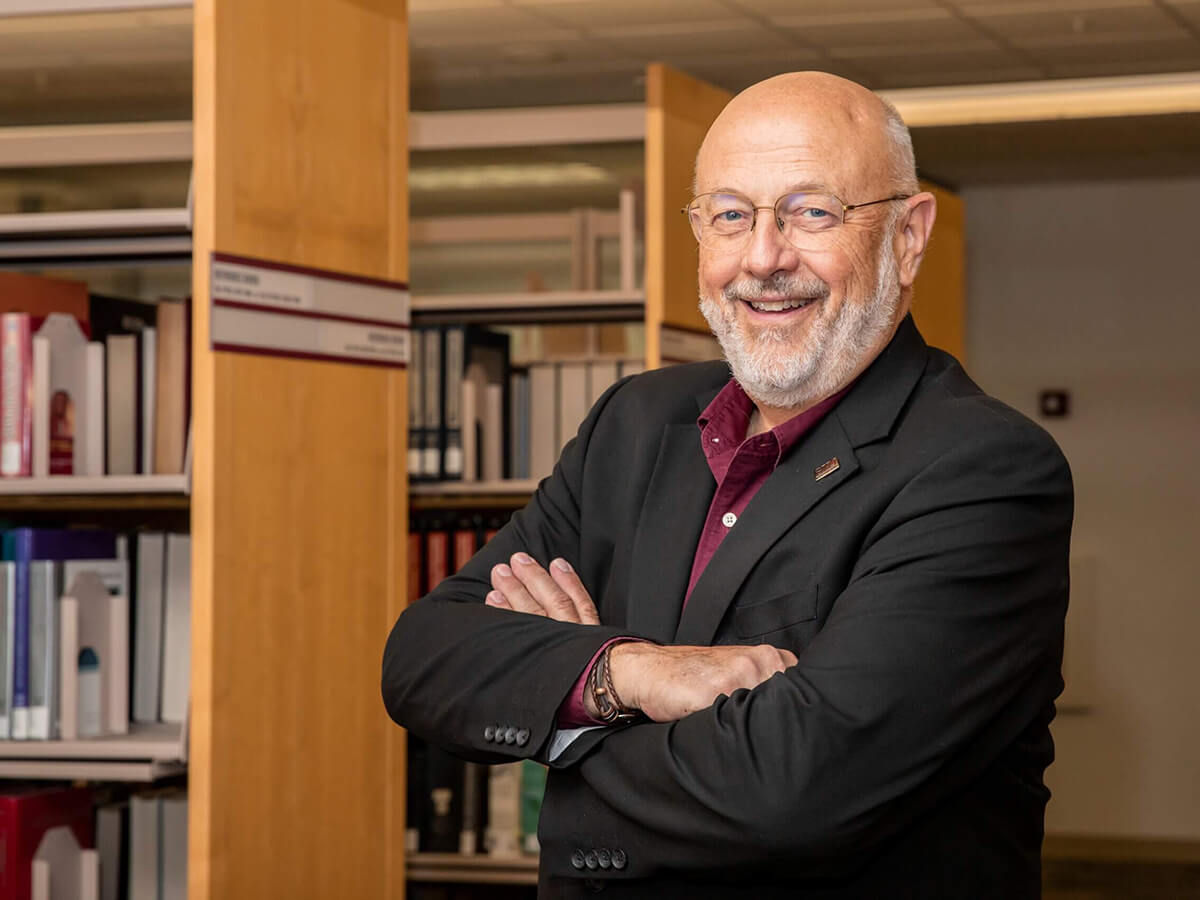
John Pollitz’s journey into librarianship was anything but conventional. Initially pursuing academia as a photography student, he later completed a master’s degree in Latin American history. However, when financial stability became a pressing concern, he found himself at a crossroads. An eight-and-a-half-year stint as a truck driver helped pay the bills, but it was his wife’s suggestion that ultimately redirected his career toward library science—a decision that would prove transformative.
John earned his library science degree from the University of Iowa and, upon graduation, secured a position at Augustana College in Rock Island, Illinois, as a reference librarian. From there, his career trajectory accelerated, moving him from technical services into leadership roles that emphasized innovation, community engagement, and the integration of technology into library systems.
During his time at Augustana College, John led significant advancements in digital archiving. Recognizing the untapped potential of technology in libraries, he spearheaded one of the institution’s early digitization projects. A particularly notable initiative involved scanning and digitizing a Civil War diary, a historically significant piece made more accessible through a collaboration with local high school students, who transcribed its contents.
Beyond digitization, John was a champion of inclusivity on campus. He formed close connections with students, particularly those from underrepresented backgrounds. His role in helping establish Latinos Unidos, a student-led organization at Augustana, exemplified his commitment to diversity and mentorship. As the faculty advisor for the group, he provided guidance and advocacy, and to this day, he holds dear the recognition he received from the group’s members for his support.
John’s contributions to Augustana’s evolving culture of inclusivity are recognized in the forthcoming book Called to Reckon: Replacing History and Reclaiming Mission at a Midwestern College, set to be published by Southern Illinois University Press. The book highlights his role in helping the institution address diversity issues and acknowledges his efforts in shaping a more inclusive campus environment.
John transitioned to St. Ambrose University in Davenport, Iowa, where he took on the role of library director. As an institution with a strong focus on social justice, St. Ambrose aligned well with John’s values. The university’s prestigious Pacem in Terris Peace and Freedom Award—which honors individuals who have made significant contributions to peace and justice—deeply resonated with him.
Among the past recipients of the Pacem in Terris award were notable figures like the Rev. Dr. Martin Luther King Jr. and César Chávez. After meeting Chávez—John remarked, “He was the closest to a saint that I’ve ever met.” This experience reinforced his admiration for Chávez’s unwavering dedication to social justice—something John himself mirrored in his approach to librarianship and education. Years later, John had the opportunity to meet Chávez’s grandson during a screening of a documentary on the labor rights leader, a moment that further solidified John’s connection to Chávez’s legacy.
While John’s career took him to Oregon State University and the University of Wisconsin–Eau Claire, nothing compared to his storied tenure at his alma mater, Southern Illinois University (SIU) Carbondale. There, he solidified his reputation as a visionary in academic library leadership. As dean of Library Affairs, John oversaw significant modernization efforts, ensuring that Morris Library remained a cornerstone of academic excellence and research innovation. Under his leadership, the library expanded its digital resources, streamlined services for students, and strengthened community engagement initiatives.
One of John’s most impactful projects at SIU Carbondale was fostering relationships with donors and supporters of Library Affairs. Recognizing the importance of securing funding for long-term growth, he worked diligently to communicate the value of library services to stakeholders. His leadership helped attract new investments in library technology and infrastructure, making Morris Library an even more vital resource for students and faculty alike.
In addition to his work at the library, John oversaw the university museum, securing exhibitions featuring works from famed sculptor Richard Hunt and renowned American visual artist and SIU alumnus Jimmy Wright. At the same time, John also managed the day-to-day operations of the SIU Press, further demonstrating his ability to balance leadership responsibilities across multiple cultural and academic institutions.
John’s career is a testament to his deep passion for the transformative power of libraries. His ability to blend traditional library values with cutting-edge technology and community advocacy has left an indelible mark on every institution he has served. From spearheading digitization projects to mentoring students and securing vital funding, his contributions have had a lasting impact on the field of librarianship.
When asked about the future of libraries, John offered an insightful perspective:
Everyone is nervous about the impact that AI will have on the workforce—except librarians—because we’ve been here before. Young professionals who find ways to integrate new technology into their work will go far. Libraries aren’t merely repositories of books; they are hubs of collaboration, innovation, and inclusivity. Libraries will continue to thrive because we are in the business of inspiring students to achieve their highest goals while providing the resources to fulfill their curiosity.
John also issued a challenge to his colleagues in the American Library Association and the ARL community, urging them to think of ways to increase diversity within library staff: “Our students are incredibly diverse, and they feel more compelled to interact with individuals with whom they can find similarities and a sense of community.”
As for the future, John looks forward to spending time with family and friends while enjoying well-earned vacations. His legacy, however, will live on in the institutions he transformed, the students he mentored, and the profession he helped shape.
Editor’s note: John Pollitz will retire from his position as dean of Library Affairs at Southern Illinois University (SIU) Carbondale on June 1, 2025, after eight years in the role.