
Last Updated on April 25, 2025, 9:34 am ET
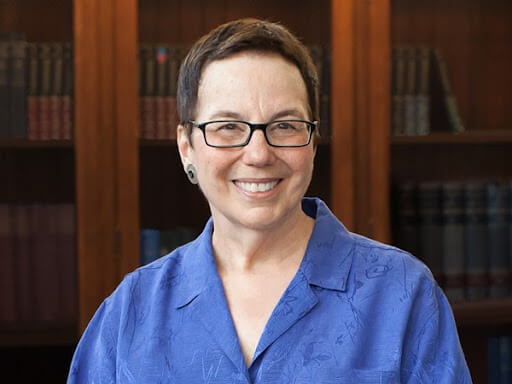
At the end of August, Harriette Hemmasi will be stepping down from her role as dean of Georgetown University Libraries, a position she has held for seven years. Before her transition, we asked her to share her story with our readers and membership—below is an overview of that conversation.
Judy: How did you get started in librarianship?
Harriette: As a music major at Baylor, I worked in the Music Library. Later I got a master’s in music and taught music for a decade at a university in Iran. It was there I began to really understand the power of education to change lives. After the Iranian revolution, I returned to the United States and worked as a library assistant in a high school library, then at a university library doing music cataloging on OCLC.
My desire to continue working as a university educator influenced my decision to pursue a library degree at UC Berkeley.
Judy: What are some of the highlights of your career?
Harriette: Instead of highlights in the usual sense, I want to reflect on what I consider to be learning and turning points in my career. An early example occurred while I was a graduate student at Berkeley involved in a music retrospective conversion project in the Music Library. Even though I was already working at a fast pace, my supervisor asked me to double my productivity due to the limited funds and time available to complete the project. When I recovered from the shock of her request, I found I could actually do it! This experience helped me understand that the supervisor was right to assess the need and suggest a path to meeting the end-goal. And she was right to ask me to do more. Her explanation, expectations, and support motivated me to succeed and taught me a lot about what’s possible—including how important it is for each of us to plan, ask, do, and expect more.
A different kind of learning evolved during my first professional job as a music librarian at Rutgers. I came to the job knowing a lot about music and music cataloging, but very little about managing staff relationships. Early on, a conflict began to brew with a staff member. After many encounters, a sense of trust and appreciation started to grow between us. Eventually, we were able to build a positive, productive working relationship. The learning point for me was in cultivating, valuing, and finding ways to integrate diverse approaches or points of view in my naive idea of management. This was the first of many opportunities that have helped me shape my understanding and approach to working with others, building an inclusive team, and finding pathways to shared success. It is a lesson I’ve had to learn many times over.
The lessons I’ve learned from donors are legion. At the end of one of my first lunch meetings with a donor where I talked endlessly about how great the Brown University Library was, he calmly asked me what I wanted. Was this a trick question or was he kidding? (No, I didn’t ask.) In response, I mumbled weakly that I’d need to get back to him. Lesson learned? Be prepared! Donors have taught me to dream, to imagine, to trust, to connect, to listen, to respond, to ask, to persevere…and, yes, to be prepared. They have taught me how much they care about their university (or libraries, or collections, etc.) and how much they want others to have life-changing, life-enhancing experiences as a result of their gifts. I am ever indebted.
Judy: Were there goals that you set as a director that you have not yet reached?
Harriette: Enabling the library to have and receive the recognition it deserves and making the library as visible and effective as it could or should be are endless goals and deeply intertwined.
Judy: What advice do you have for individuals who aspire to leadership positions/roles in libraries?
Harriette: Listening, watching, and asking questions and recognizing that there are many styles and approaches to effective leadership.
For people aspiring to land a leadership position in a particular organization, it’s very helpful to read about the institution’s history and its aspirations. What is the organization trying to do, and why, and do the goals and directions fit with yours?
Once you’re in a leadership position, learn to work with what you have and ask for what you need. Compromise and pivot, when possible. Learn to express disagreement without alienating others.
Judy: What key issues do you think research libraries will face in the next five years?
Harriette: The current economic, political, and societal pressures on higher education are defining a very complex future for academic libraries. What role libraries will play within our institutions and how effectively will library leaders be able to steer the inevitable changes? Along with other technological developments, how will AI alter library jobs? How will we determine and make the best use of human and technological skills?
Judy: What still inspires you about librarianship?
Harriette: Inspiration comes from seeing evidence that libraries are making a difference in the lives of students, faculty, staff, in our institutions, and in our broader communities.
Judy: What areas in librarianship would you encourage young professionals to focus on?
Harriette: I encourage a focus on organizational development and planning and in coordination with others on campus, developing a holistic approach to student success. Other important areas include digital preservation, incorporating AI and other innovative uses of technology.
Judy: What do you look forward to in the next phase of your life?
Harriette: These jobs are intense. I’m looking forward to getting reacquainted with myself and having time to reorient myself to this next phase.
Judy: Is there anything else you would like to share?
Harriette: I’d like to acknowledge how much I appreciate the work of ARL on behalf of libraries and higher education, and you as a colleague in particular. Thank you!