

Last Updated on September 30, 2025, 2:34 pm ET

Representatives from the Machine Actionable Plans (MAP) pilot institutions and other institutions interested in the implementation of machine-actionable data management plans (maDMPs) gathered on September 15 and 16 in Washington, DC, to discuss next steps for their work.
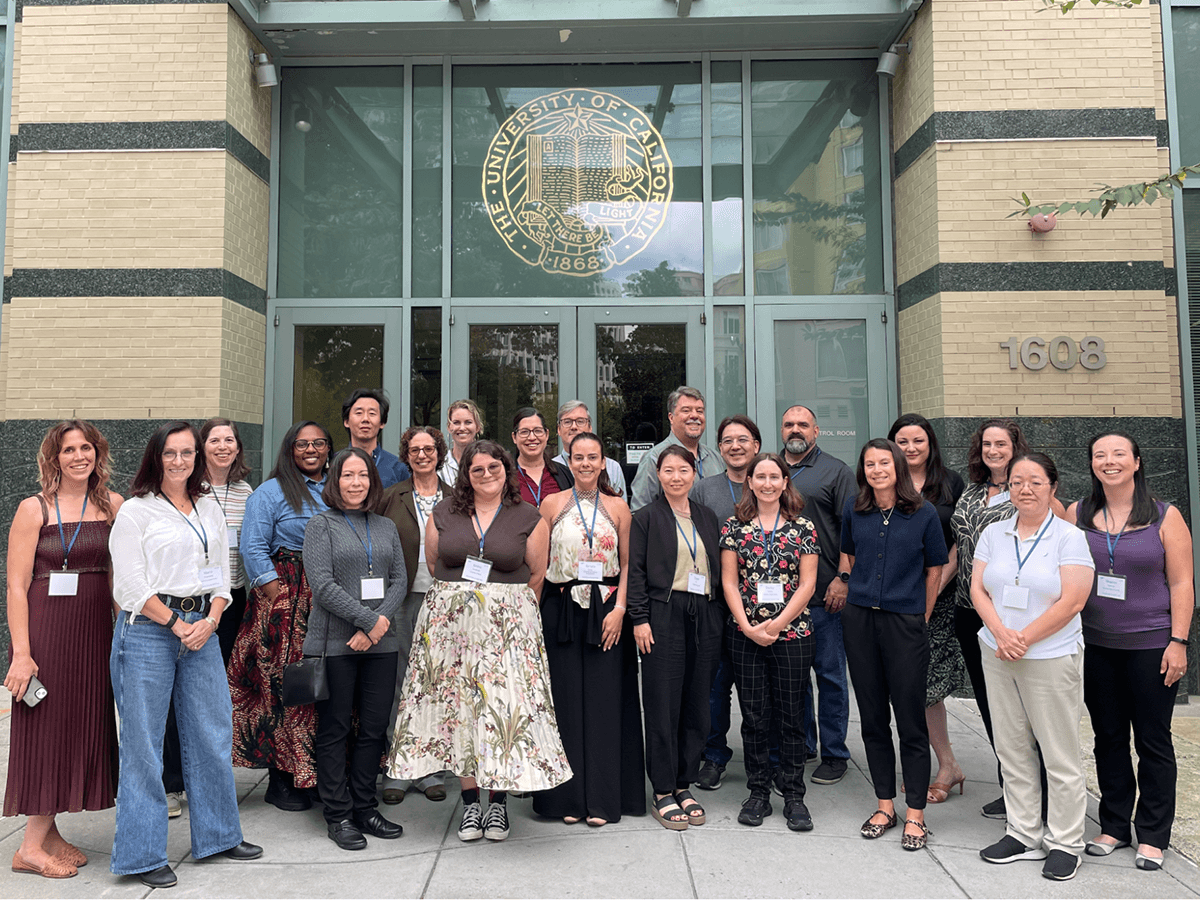
The workshop, led by the Association of Research Libraries (ARL) and the California Digital Library (CDL), as well as MAP pilot consultant Clare Dean and facilitator Daniella Lowenberg, explored how higher education and research institutions can develop and yield the benefits of enterprise-level research-data infrastructure. Building on prototype work from the MAP pilot campuses, and with funding from the US Institute of Museum and Library Services, LG-254861-OLS-23, participants considered how persistent identifiers, emerging technologies like generative AI, and other systems integrations can improve institutional research-data services and streamline resource management across the research life cycle.
To realize these goals, the two-day workshop was structured to balance shared learning with active problem-solving, giving participants the chance to hear from pilot sites, exchange experiences, and begin brainstorming next steps. Combining facilitated and organic conversations, the workshop aimed not only to review progress to date but also to lay the groundwork for future directions.
Key Takeaways
Workshop participants noted that increasing maDMP use and implementation will depend primarily on changes within institutions. The key opportunities identified included:
- Strengthen communication and connections across different parts of the institution. While administrative silos and varying cultures of practice can sometimes create barriers, participants emphasized that focused cross-campus workshops and shared pilot projects provided powerful ways to build collaboration and alignment.
- Expand education and outreach for researchers and administrators. Participants highlighted the value of creating outreach materials that could be integrated into training, especially for early-career researchers, ensuring broad awareness and adoption from the start of their careers.
- Demonstrate the ways maDMPs can create efficiencies, support compliance, and save resources in the face of competing priorities. While participants acknowledged the real pressures on time and resources, they agreed that investing in maDMP implementation will pay dividends regardless of the direction institutions take.
- Reduce duplication of efforts across different units by streamlining tools and resources. Participants noted that overlapping systems often lead to unnecessary spending, and that centralizing efforts could lead to operational efficiencies and cost savings while strengthening collaboration.
- Ease compliance and systems fatigue by streamlining integration and implementation. Participants emphasized that thoughtful approaches can make new processes feel less burdensome, building confidence and buy-in across units.
- Strengthen internal policies and local guidance around DMPs. By developing consistent practices now, universities can reduce variability, build efficiencies, and be better prepared to align with federal standards when they arrive.
These topics surfaced in conversations throughout the workshop, as we worked together to share insights and ideas.
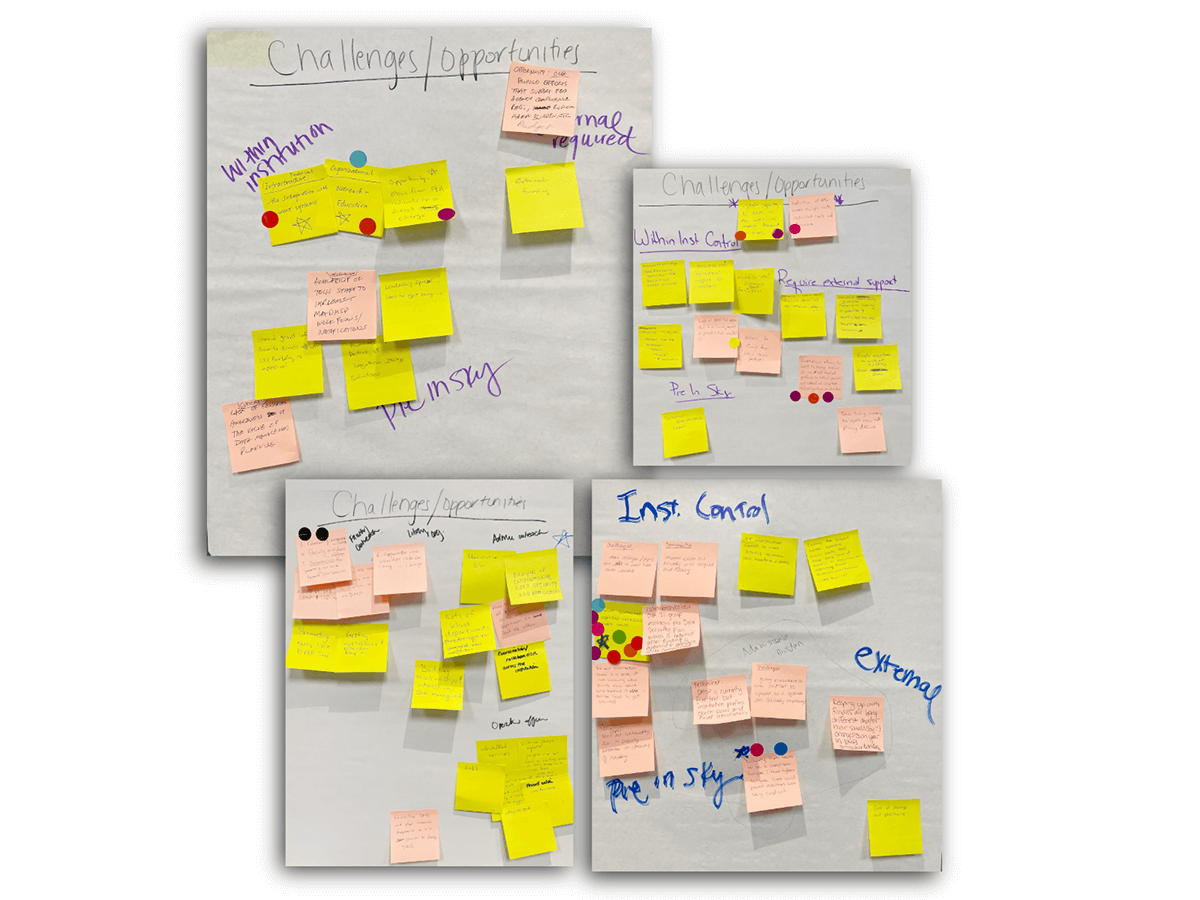
During a “pitch” session at the end of the meeting, participants brought forward areas they are interested in exploring further in the future. There was deep enthusiasm for receiving further updates on the activities of other institutions, and for greater sharing of resources created from the pilot, including the MAP pilot report, case studies, and key recommendation guides. Relatedly, participants requested the creation of a GitHub space or other repository where institutions could share code they’ve developed. The MAP pilot conveners will be acting on these requests in the upcoming few weeks.
Workshop Outcomes
The workshop enabled participants, and we hope the broader community, to build connections that will spark new collaborations and support innovative approaches to maDMPs.
Several next steps emerged, including advancing AI integrations for maDMPs to streamline planning and compliance processes. In addition, participants identified a priority to develop researcher budgeting tools in collaboration with the Realities of Academic Data Sharing (RADS) initiative, creating mechanisms for faculty to more accurately project costs and for institutions to allocate resources effectively.
Together, these efforts position institutions to strengthen both the usability and the strategic value of maDMPs across the research life cycle.
Participant advice to others exploring maDMPs included:
“There is a tremendous opportunity to improve monitoring via integration with maDMPs.”
“Leverage interest in promoting responsible conduct of research and research integrity to demonstrate that maDMPs contribute to a culture of ethical research.”
“Don’t forget that other departments on campus are approaching maDMPs with a different starting perspective.”
“Implement some basic automations in your current process to highlight the utility of maDMPs.”