
Last Updated on January 16, 2025, 6:11 pm ET
I remain cautiously optimistic because I continue to believe deeply in the library’s mission…
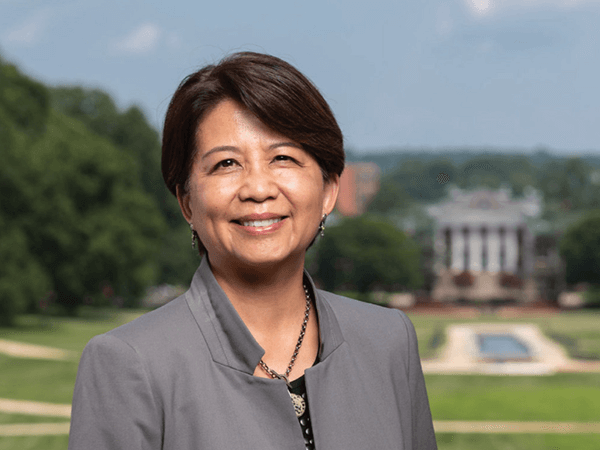
At the end of the 2024 spring semester, Adriene Lim, PhD, retired as dean of libraries at the University of Maryland (UMD), College Park. Before her transition, we asked her to share her story with our readers and membership, below is an overview of that candid conversation.
TE: Why and how did you start in librarianship?
AL: I’ve been a dean and university librarian at four academic institutions in my career. This journey, becoming a librarian and then ultimately leading libraries, became a goal of mine primarily because I found meaningful refuge in libraries as a child. The idea became more of a possibility when, as a student, I met my first librarian of color at Schoolcraft Community College. I viewed my choice as a calling to help others transform their lives through lifelong learning and education.
My childhood and formative years in inner-city Detroit were challenging. My family experienced financial hardships, I struggled to avoid intrafamilial violence, and I had to learn to navigate my place as a member of several marginalized identities, including being an ethnic and racial minority, a member of the working-poor class, a lesbian, and a woman in a sexist society.
Finding my voice and community were all facilitated by my frequent visits to the Detroit Public Library, my haven. So, when I later contemplated the careers that would offer the most meaningful impact, where I could be my authentic self, librarianship was one of my top choices.
As a young person, I was a community activist working on advancing women’s and LGBTQ+ rights, advocating for anti-racist action, and raising awareness about domestic violence. Fighting for equitable and just outcomes for all individuals was most important to me. My activism taught me how to be a leader as I worked with multiple political groups to form coalitions and strive toward collective goals. However, when I began working in libraries, I no longer felt comfortable with the vulnerability of disclosing the totality of my true self. I hid parts of myself because the culture of leadership didn’t seem to accept non-conforming journeys such as my own. There is something to be said about professionalism, where the backgrounds and experiences of individuals who are different from the dominant culture don’t really fit into the frameworks and expectations. So, like others in my situation sometimes do, I hid myself under the guise of professionalism.
Interestingly, as I became more comfortable in my career, I allowed my engagement with others to be more authentic and I found that this mostly helped to bolster the work I was doing and facilitate collective action in the library context. Although this journey didn’t happen overnight, with each step taken, I considered the risk calculus of being my authentic self and I’ve come to realize that we librarians have to be as brave as we can be—at times we have to be in the eye of the storm—because we can intentionally decide to be the catalysts for change in our society. This is evident by the many ways in which we librarians and library workers resist the recent attacks on our library missions and values, where censorship efforts; book banning; the prohibitions against diversity, equity, and inclusion; and other negative social movements are advanced by those in positions of power. Amid these disheartening examples of backlash, we are choosing to serve as leaders for positive change and provide countervailing resources for our communities.
TE: What do you think about the future of librarianship?
AL: I remain cautiously optimistic because I continue to believe deeply in the library’s mission. I believe in the library’s role in bringing people together to create and gain access to knowledge, all while reinforcing the democratic ideals in our society. Not every library is a public library, yet most libraries are dedicated to democratic principles. Organizations like ARL that work in policy domains for the public good and offer new models for open scholarship, community-based research, and intellectual and cultural enrichment serve as outstanding examples of the high-impact work that libraries can do for our society overall.
There are, however, several issues and challenges that cause me to have deep concerns, things like the worsening polarization of our political discourse and the ubiquitous spread of misinformation, and the risks that libraries—and associations like ARL—take on when they fight for what they believe in. Librarians and library workers are going to have to exhibit even greater courage, resilience, and strength in the coming years to promote our shared values and goals; and that’s when leadership counts the most, when the going gets toughest. We will have to be even more strategic in the future, as we build coalitions to gain strength in numbers and capacity, and as we offer compelling ideas to solve the troubling problems we face as human beings.
TE: What are some of the highlights of your career?
AL: I’m proud to say that I’ve been involved throughout my career in moving libraries forward into new, more sustainable, effective models, even though in most of these cases, we were operating in very challenging political and fiscal environments. We strengthened our leadership in open scholarship and participated increasingly in powerful consortiums, were leaders in online education and disciplinary research, joining with partners throughout the universities to strengthen the academic enterprise. Over the long term, we shifted from a primarily local and regional focus to a national/global focus with increased recognition and impact in higher education. We also made progress in our aspirations to become more diverse and inclusive. We continued to prove the case that our library organizations were major assets for our universities in their endeavors to expand academic research, enhance student success, and deliver excellent, educational experiences for students.
Coming up through the ranks on the systems and information technology side of libraries, I gained unique opportunities to lead many initiatives and major projects in every domain of the library, especially as technological change escalated and expanded into all areas of library operations and higher education. My earlier foundational experiences enabled me to develop into a leader in the areas of digital collections, information discovery and access, resource sharing systems, and the implementation of new learning models. With key colleagues, I’ve overseen the fundraising for and opening of a new medical library and a new science library and led multimillion-dollar digital library projects.
But the most important thing I learned in my years as a dean, I would now like to pass along to other leaders and aspiring colleagues still in the field: the maxim, “don’t forget to live,” which reminds us that there is no such thing as work-life balance, there is only your life and it’s important to enjoy it. Working in libraries can be joyful, but it can also be demanding, stressful, and exhausting, especially when inevitable crises like global pandemics and budget reductions occur. There is so much riding on a leader’s shoulders that it is easy to neglect the most important things, so I say, live your life as joyfully as possible, enjoy your family, and make time for self-care while you do the work. Throughout my long career, I’ve averaged 60- to 65-hour work weeks, and I’m just not sure that those workaholic models are going to work well or should be acceptable for the next generation of leaders. We should instead be creating new paradigms that allow for more creativity, contemplation, and interdisciplinary human connection than we experience now, in my humble opinion.
As I leave this chapter of my life, I recognize that libraries are needed now more than ever. Efforts related to diversity, equity, and inclusion must continue to be an ongoing priority, because the systems that seek to oppress vulnerable populations are deeply ingrained in our society and will continue to defend themselves ferociously. I express my deepest gratitude to those who remain in the field as passionate leaders, educators, scholars, and practitioners who are fighting the good fight in libraries and higher education. I will be there with you in spirit if not always there physically, and one of your most ardent cheerleaders. I can’t wait to see what you will accomplish next!