

Last Updated on April 9, 2026, 10:52 am ET
In the first few minutes of a Zoom meeting, as the faces we expect appear one by one, it’s easy to fill the space by swapping notes about the weather where we are. Hot enough for you yet? Up here in the mountains, you still need a sweater. This round of small talk reaches beyond the digital squares in which geographically dispersed professionals so often encounter each other, acknowledging the emplaced and increasingly unpredictable weather worlds we inhabit away from the screen. A recent book by humanities scholars Astrida Neimanis and Jennifer Mae Hamilton considers how we connect the dots between the looming crisis of climate change and the mundane experience of weather, understood in “more-than-meteorological” terms as conditions under which natural and cultural domains impinge on one another. How to Weather Together: Feminist Practice for Climate Change (Bloomsbury, 2026) develops a feminist environmental humanities methodology, at once theoretical and practical, for grappling with who deserves shelter and who is allowed to remain vulnerable in the face of a changing planet.
Neimanis and Hamilton argue that efforts to address climate change need feminism to avoid reproducing oppressive systems in a greener guise. In particular, they champion strands of feminist thought that are antipolarizing, in that they invite people to move beyond entrenched positions, and antifascist, in that they reject exclusionary visions of justice. Informed by these commitments, Neimanis and Hamilton develop a concept of weathering as the accumulation of weather’s effects at the level of the body and the way these effects are differentially distributed. Weather weathers some of us more and faster than others. The challenge, they contend, is to pay attention to the interplay of material and social drivers of disparity without giving the former the last word. This convergent approach, even as it distances itself from old determinisms, still runs the risk of “exploitation by racist or ableist or other harmful ideologies.”
The second half of How to Weather Together shows how Neimanis and Hamilton have brought their theoretical framework to life in research spaces that they have designed in Australia and Canada. The Armidale Climate and Health Project that Hamilton has developed with a clinician collaborator engages with the emerging field of planetary health but works to unsettle its global scale and emphasis on economic productivity, through events tracing local food systems that have drawn together Indigenous and non-Indigenous people in an agricultural region north of Sydney. Meanwhile, the FEELed Lab that Neimanis founded at a wooded retreat center managed by the University of British Columbia has placed feelings like climate grief at the center of its activities, using a range of creative practices to explore learning to live with climate change. Without denying the importance of climate science, Neimanis’s lab aims to develop complementary arts-based methods that enable meaning-making when feelings signal, however obscurely: “Pay attention to what’s happening here.”
Interspersed between the chapters of How to Weather Together are insets hand-drawn by artist Tessa Zettel, who was a longtime member of the Weathering Collective anchored by Neimanis and Hamilton. The insets provide visual instructions for how to engage in the practices of inquiry described throughout the book, from games to get a group thinking to public events like a walking workshop to a guided meditation on the deep history of a place. Lest these practices come across as contrived or twee, Neimanis and Hamilton make a compelling case for them as opportunities to engage in “low-stakes vulnerability.” One wonderfully off-kilter example is an installation of sorts created by Neimanis, in which free haircuts are offered along with an invitation to share stories of difficult conversations about climate change. Perhaps, Neimanis and Hamilton wager, it is in slightly awkward, embodied encounters like these that we cultivate the courage to reimagine how we live together in a world we no longer recognize.
Takeaways for Library Leaders
The ways of working that Neimanis and Hamilton have compiled in How to Weather Together register wider trends in humanities scholarship toward research-creation informed by the creative arts and toward the public humanities, broadly conceived. (They are not especially informed by the digital, a term that does not even appear in the book’s index.) Libraries can work with researchers to document public scholarship as it happens, initiating vital discussions about what ought to be preserved and what might best remain ephemeral. Embedded in those discussions can be a set of queries about how projects are planned, executed, and evaluated in ways that are accountable to diverse knowledge partners.
Zettel’s visual instructions also reflect a movement in open scholarship toward the sharing of detailed methods information, which provides context on how research data were generated. While the sharing of lab protocols or computational workflows is often framed as a precondition for reproducibility, Neimanis and Hamilton are clear that How to Weather Together is “not a conventional step-by-step manual that is replicable 1:1.” Instead, they ask: “If we did things in a certain way under certain circumstances, how might you do related or complementary things?” By resisting what critics have called the “anti-social copy-pasting” of replication logics into fields like the humanities, libraries can promote the sharing of methods in epistemically relevant ways and ground this exchange in generosity rather than enclosure and capture.
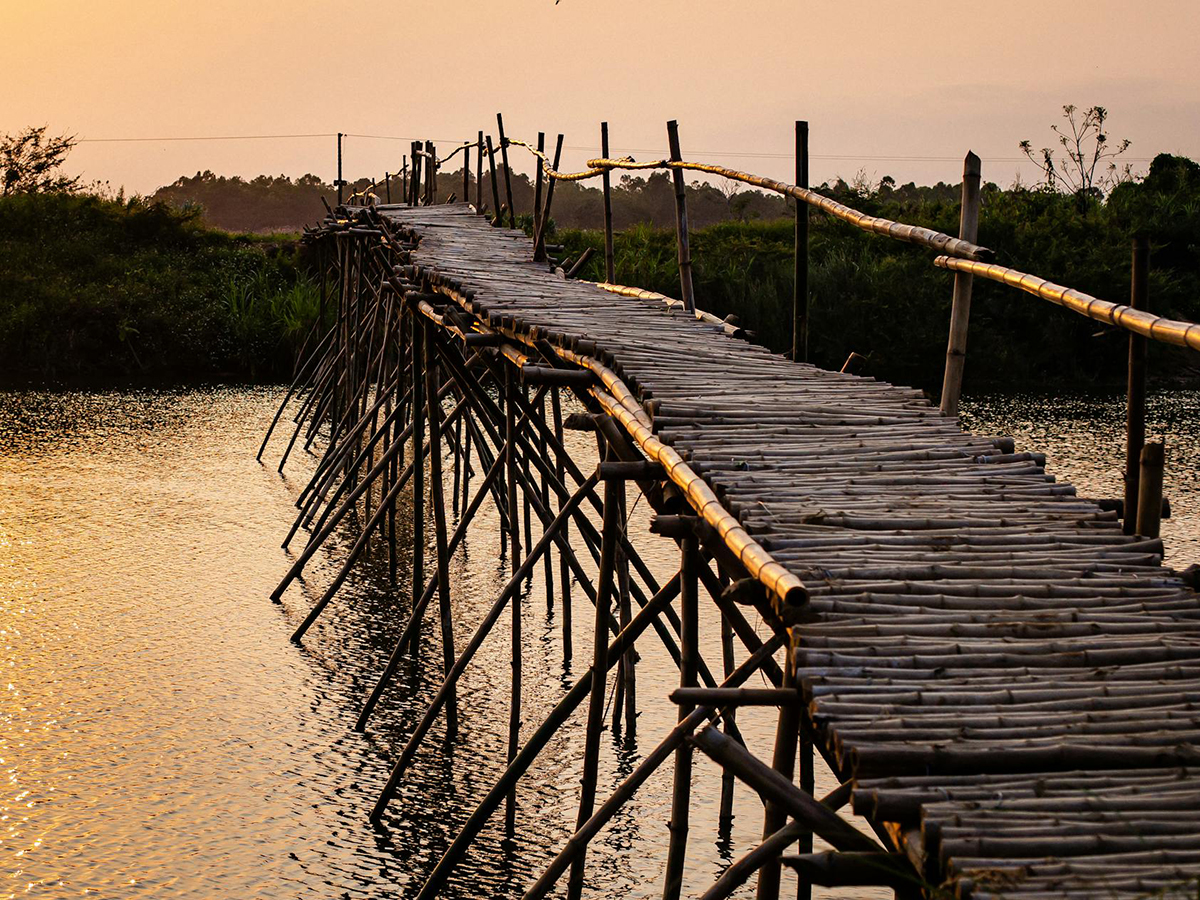
By framing their work in terms of “designing and building climate change mitigation and adaptation infrastructures,” Neimanis and Hamilton have a definition of infrastructure in mind that goes beyond physical systems to include any kind of structure for supporting social worlds. How, I found myself wondering, does ARL act as this kind of infrastructure? Most obviously, we connect our members to efforts like the Sustainable Libraries Initiative, which promotes environmentally sound, socially equitable, and economically feasible practices to intentionally address climate change. But more broadly, associations like ARL can serve as adaptation infrastructures to help our member libraries weather deeply uncertain times. Neimanis and Hamilton offer the image of two bridges: one made of bamboo—humble, place-based, capable of being unbuilt and rebuilt in tune with the seasons—and another made of concrete, built for speed and efficiency and determined to withstand any storm. How can our association act a bit more like the bamboo bridge, rejecting illusions of immunity to changing conditions and instead making space for the kind of adaptation that entails transformation?