Fewer than 10 percent of the world’s publications are available in accessible formats according to the World Intellectual Property Organization (WIPO), yet more than 250 million people are visually impaired and need access to those works. Students and scholars with print disabilities cannot fully participate in classes or contribute to scholarly communication if accessible works are not made available.
Learn more below about the work being done by ARL and the Canadian Association of Research Libraries (CARL) to implement the Marrakesh Treaty in libraries in Canada and the United States. This page also includes accessibility resources, information on the legal and regulatory environment of accessibility in the US, and links to further reading.
Copyright and Accessibility Resources
Updated Code of Best Practices in Fair Use for Academic and Research Libraries Now Available
The addendum clarifies ambiguities in copyright law referenced in the original Code that have since been resolved by case law and statute, and offers guidance to libraries on providing accessible materials to print-disabled members of a college or university community; clarifies that “eligible persons” include people with mobility impairments and learning disabilities; and explains that libraries can rely on fair use to create accessible versions of materials beyond literary works and musical works.
Fair Use Supports Accessibility, but you don’t have to take my word for it
Fair use gives libraries the legal footing to make copyrighted materials accessible for people with disabilities. This piece highlights these points:
- No explicit permission needed: Libraries can reformat inaccessible works under fair use, backed by Congress and the Authors Guild v. HathiTrust ruling.
- No individual request required: Libraries can proactively create accessible versions in anticipation of demand, without waiting for a specific eligible person to ask.
- No proof of purchase needed, and no expiration: Accessible copies can be made and kept indefinitely; the law doesn’t require destroying them after a semester.
- Use it or lose it. Unexercised rights can weaken over time. Libraries are urged to actively use these protections.
Title II and Research Libraries
On April 24, 2024, the Federal Register published the US Department of Justice’s final rule on Title II of the Americans with Disabilities Act (ADA), which includes specific rules for state and local governments to ensure that web content and mobile applications are accessible to people with disabilities. Most entities have until April 24, 2026, to comply with this regulation (smaller public entities have until April 26, 2027).
Linked here is a discussion of experts from the research library and disability rights community about the updated Americans with Disabilities Act (ADA) Title II regulations. After a brief overview of the regulations and exceptions by Nancy Horton, Associate Director of the Mid-Atlantic ADA Center, the group explores the types of library content and resources that might be affected by the regulations and exceptions, and offers recommendations for how your library can approach interpreting and implementing the regulations. Then, Samanatha Teremi describes how libraries can leverage the regulations to negotiate for born-accessible content.
Title II and Research Libraries: Community Call Recording
For more information, see:
- ARL Member Session: Digital Collections and ADA Title II Notes (March 19, 2025)
- ADA Title II Regulations: Implications for Libraries
- Licensing accessible content
- Mid-Atlantic ADA Center Slides
- Analyzing the Applicability of ADA Title II Exceptions to Your Library’s Resources
Accessibility Metadata: Challenges and Ways Forward (Presentation at 2025 Library Publishing Coalition Meeting)
Metadata fields for accessible works are not standardized or even required, creating challenges for people with disabilities to find books or scholarly journals in accessible format or with accessibility features enabled. In this session, library metadata experts will share updates on international initiatives to improve accessibility metadata, including updated MARC fields; activities of the National Information Standards Organization (NISO) accessibility remediation metadata working group; related work of the IFLA network focused on developing best practices for recording accessibility metadata; and, examples of library publishing in Canada and the US. The panel will touch on how metadata requirements in the European Accessibility Act (EAA) might influence markets beyond those in the EU.
- Katherine Klosek, Director of Information Policy and Federal Relations, Association of Research Libraries (ARL)
- Julie Cardinal, retired Associate University librarian Cataloging and Metadata, Université de Montréal
- Katherine McColgan, Manager, Administration and Programs, Canadian Association of Research Libraries (CARL)
- Chris Oliver, Librarian Emeritus, University of Ottawa
- Victoria Owen, Information Policy Scholar-Practitioner, University of Toronto
- Pascal Calarco, Systems Librarian and Scholarly Communications Librarian, University of Windsor
View the presentation online
Global Laws and Initiatives for Accessible Publishing
The goal of the World Intellectual Property Organization (WIPO) Accessible Books Consortium (ABC) is to increase the number of books worldwide that are published in accessible formats and to provide access to works in accessible formats. The Marrakesh Treaty—administered by WIPO—supports the production and international lending of books in accessible formats for people with blindness or visual impairments through national exceptions and limitations to copyright. During this Library Publishing Coalition (LPC) webinar, Monica Halil Lövblad, head of ABC, gives an overview of the Marrakesh Treaty, and of ABC’s programs and initiatives promoting the production of born-accessible content. Victoria Owen, information policy scholar-practitioner, special advisor to the dean on accessibility of information at University of Toronto, and ABC Board member, provides a brief report on the work of the Association of Research Libraries (ARL)/Canadian Association of Research Libraries (CARL) Task Force on Marrakesh Treaty Implementation.
You can view the webinar online. Related resources are below:
-
ABC Course on Accessible Publishing Concepts in English which is a free, online course open to all
-
The ABC Charter for Accessible Publishing contains eight aspirational principles that publishers should follow to make their digital publications accessible to persons with print disabilities. ABC now has over 140 signatories. Once signed please return to Accessible.Books@wipo.int.
Making Digital Works Accessible through Publishing (Not Permission)
“Making digital works accessible through publishing (not permission).” During the 2023 Charleston Library Conference, ARL, UC Berkeley Library, and University of Florida Libraries, and Tulane University Libraries presented on ways that libraries have successfully shifted liability by including indemnification clauses and accessibility language in license agreements.
For more, see the “Making Digital Works Accessible through Publishing (Not Permission)” chapter in the 2023 Charleston proceedings.
The Marrakesh Treaty: Connecting Scholars with Accessible Texts across Borders
By Kelsey Corlett-Rivera and Katherine Klosek
Presented at the 2023 SALALM Conference

Further Reading on ARL/CARL Marrakesh Task Force
- ARL comments on Section 504 of the Rehabilitation Act of 1973
- WIPO panel discussion on Marrakesh Treaty and the Accessible Books Consortium (ABC)
- Canadian and US academic libraries celebrate Global Accessibility Awareness Day by working together to facilitate access for the print disabled
- ARL and CARL form joint task force on Marrakesh Treaty implementation
- Hear from project organizers in this presentation Addressing the 7% Problem: The FRAME Project and the CARL-ARL Marrakesh Treaty Implementation Project
- Learn more about accessibility in Canada from CARL
- Read this blog post, “If It’s Open, Is It Accessible?,” by Pascal Calarco
- Listen to this ARL Views podcast episode featuring Victoria Owen on libraries and the Marrakesh Treaty
Foundational Reading
Close
Show More
Education in a Pandemic: The Disparate Impacts of COVID-19 on America’s Students
US Department of Education, Office for Civil Rights, June 2021
“Managing Digital Accessibility at Universities during the COVID-19 Pandemic”
By Jonathan Lazar
Universal Access in the Information Society (2021)
“Open but Not for All: A Survey of Open Education Resource Librarians on Accessibility”
By Teresa Auch Schultz and Elena Azadbakht
College & Research Libraries 82, no. 5 (June 30, 2021)
“Planning for Digital Accessibility in Research Libraries”
By Jonathan Lazar
Research Library Issues, no. 302 (2021): Sustaining Open Content and Infrastructure
Report of the ARL Join Task Force on Services to Patrons with Print Disabilities
By Mary Case et al.
Association of Research Libraries, November 2, 2012
The Law and Accessible Texts: Reconciling Civil Rights and Copyrights
By Brandon Butler, Prue Adler, and Krista Cox
Association of Research Libraries and University of Virginia, July 8, 2019
Resources
Close
Show More
Model Licenses for Accessibility
The Library Accessibility Alliance engages with library vendors in initiatives to improve usability of online resources for all users, including by promoting model license terms.
Scholarly Communication Notebook OER
For more on accessibility and copyright, see this open educational resource (OER) created by Carli Spina for the Scholarly Communication Notebook, which is licensed CC-BY.
US Department of Justice (DOJ) Guidelines
Recent DOJ guidance reinforces accessibility as an enforcement priority for the agency, and supports state and local governments—as well as public businesses—in ensuring their websites are accessible.[/expand]
Legal Foundation for Libraries Creating Accessible Works
Chafee Amendment
Research libraries are committed to making information resources as broadly accessible as possible. But the exclusive rights of copyright owners, including publishers, can be a perceived impediment to making copyrighted works accessible. Before the enactment of the 1996 Chafee Amendment—now Section 121 of the Copyright Act—libraries requested permission from publishers to make books and other works accessible. The Chafee Amendment clarified that it is not an infringement of copyright for authorized entities like libraries to create and share works in accessible formats.
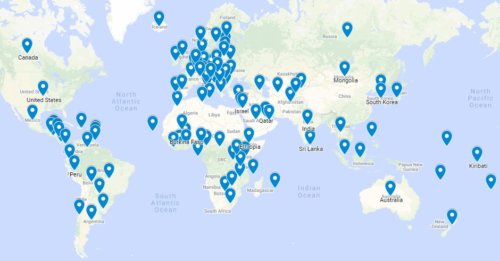
In 2019, the US Congress adopted changes to broaden the scope of the Chafee Amendment and clarify who is eligible to create and share accessible works. These changes were part of the US ratification of the Marrakesh Treaty to Facilitate Access to Published Works for Persons Who Are Blind, Visually Impaired or Otherwise Print Disabled, an international instrument that aims to end the global book famine. Since 2020, ARL and CARL have been working together on a task force to implement cross-border lending under the terms of the treaty.
Fair use
Libraries may also rely on fair use to create and lend accessible works. Fair use is a legal doctrine in the Copyright Act that permits the use of copyrighted works in some circumstances, without the user acquiring permission. In the Authors Guild v. HathiTrust decision, the Second Circuit Court of Appeals concluded that libraries digitizing works and storing digital files is a fair use if the libraries also provide full-text access and search functionality to people with disabilities. Critically, the HathiTrust decision clarified that libraries can rely on fair use in addition to the library exceptions enumerated in Section 108 of the Copyright Act. For more information on digital rights, please see knowyourcopyrights.org.
Section 1201 of Digital Millennium Copyright Act
Section 1201 of the Digital Millennium Copyright Act (DMCA) prohibits circumventing digital locks to access copyrighted material, even for noninfringing uses like making works accessible. Users may petition the US Copyright Office for an exemption to this prohibition through a rulemaking process that occurs every three years. In each rulemaking since 2003, members of the disability community including the American Foundation for the Blind (AFB) and the American Council of the Blind (ACB) have asked for and been granted an exemption permitting people with disabilities to read electronic books. In light of the repeated granting of this exemption, the burden on the disability community, and the requirements of the Marrakesh Treaty to ensure that rules against circumventing digital locks do not impede the availability of works in digital formats, the Copyright Office has acknowledged that it would be appropriate to make this exemption permanent.
Legal and Regulatory Environment for Accessibility in US and Canadian Research Institutions
United States
In the US, there are a number of laws that are the basis of federal policy for persons with disabilities, including Section 504 of the Rehabilitation Act of 1973, the Americans with Disabilities Act of 1990, and a 1998 amendment to the Rehabilitation Act (Section 508). Combined, these statutes and amendments ensure accessibility for individuals with disabilities to public accommodations, services, employment, and more. The US Department of Justice (DOJ) Civil Rights Division and the US Department of Education (ED) Office of Civil Rights share oversight and enforcement of legal provisions relating to people with disabilities at colleges and universities.
Section 504 of Rehabilitation Act
Section 504 of the Rehabilitation Act of 1973 established nondiscrimination requirements for all entities receiving federal funds
Americans with Disabilities Act
The Americans with Disabilities Act mandates the elimination of discrimination on the basis of disability. Title I prohibits discrimination in public and private employment against individuals with disabilities. Title II provides individuals with disabilities with an equal opportunity to benefit from all state and local government programs, services, and activities. Finally, Title III prohibits discrimination against individuals with disabilities regarding the “full and equal enjoyment of the goods, services, facilities, privileges, advantages, or accommodations” of any public accommodations, including private, postsecondary institutions.
Section 508 of Rehabilitation Act
Section 508 of the Rehabilitation Act Amendments of 1998 relates to access to federally funded programs and services. The amendment requires that the electronic and information technologies that an agency develops, procures, maintains, and/or uses must be accessible to federal employees and all members of the public. Many states have similar laws and requirements.
Website Accessibility Standards
After years of a rulemaking process at the US Department of Justice (DOJ) that disability advocates anticipated would align with the Web Content Accessibility Guidelines (WCAG) of the World Wide Web Consortium (W3C), the process was canceled. The DOJ affirmed that websites need to comply with the Americans with Disabilities Act (ADA). Section 508 of the Rehabilitation Act points to WCAG as a voluntary accessibility standard.
Canada
In Canada, accessibility law is under provincial or state jurisdiction. There is no national legislation specific to the area of accessibility. Therefore, practices supporting people with disabilities may vary from province to province. In Ontario, for example, academic institutions and libraries work under the Accessibility for Ontarians with Disabilities Act (AODA); whereas, in Saskatchewan, the Saskatchewan Human Rights Code, alongside the Canadian Charter of Rights and Freedom, is applied.
Unlike accessibility law, Canadian copyright law is under federal jurisdiction. Copyright issues affecting persons with disabilities are dealt with solely at the federal level in the Copyright Act.
For more information, please see this Report of the ARL Joint Task Force on Services to Patrons with Print Disabilities.
-

Fair Use Supports Accessibility, but You Don’t Have to Take My Word for It
Updated Americans with Disabilities Act (ADA) Title II regulations will take effect on April 24, requiring state and local government websites and digital content to meet accessibility standards. As libraries...
-
How Congress Can Improve Accessibility and Digital Access
For EFF Copyright Week 2026: Device and Digital Ownership Every three years since 2003, disability rights advocates and library associations have petitioned the US Copyright Office for permission to access...
-

The Importance of the European Accessibility Act to Canada and the United States
Recently I was asked to introduce and facilitate a session on web accessibility and repositories for accessible scholarly works. As I prepared for the session the focus was slightly revised...