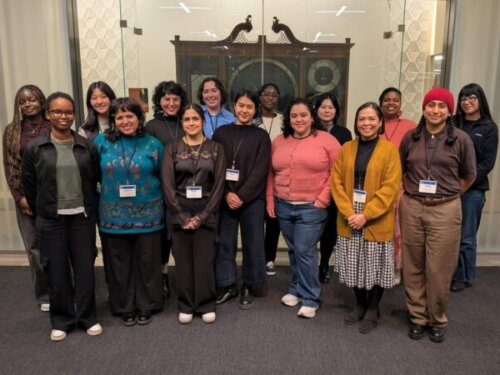
Below are rosters of the 2025 cohort and 2024 cohort of Kaleidoscope Program Scholars:
2025 Kaleidoscope Program Scholars
 Gabi Benedit
she, her, hers, herself
The University of North Carolina at Chapel Hill
Gabi Benedit is a second-year MSLS student at the School of Information and Library Science at The University of North Carolina (UNC) at Chapel Hill. Currently based in Raleigh, North Carolina, she was born and raised in San Juan, Puerto Rico. Her research is firmly based in an ethics of care, focusing on community-centered, decolonial, and trauma-informed cultural heritage outreach, education, and conservation practices.
With a BA in cinema and media studies from Wellesley College and an MA in food studies from New York University, film and food were lenses through which she first studied the politics of cultural preservation, social ties, intersectionality, and meaning-making. A relationship-builder with a background in hospitality, she believes in the transformative potential of libraries, archives, and museums (LAM) and is always looking for ways to address gaps in access.
She currently serves as the Conservation and Preservation graduate assistant for UNC University Libraries. Gabi is also the 2025 recipient of the F. Gerald Ham and Elsie Ham Scholarship given by the Society of American Archivists. She looks forward to a career where she can put her principles into practice, building out spaces of inclusion, discovery, and empowerment for all.
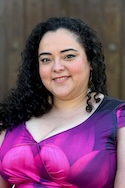 Marina Luz Corrales
she, her, hers, herself
San José State University
Marina Luz Corrales recently earned her doctorate in education from Santa Clara University and is now pursuing a master of library and information science (MLIS) at San José State University. A Bay Area native with strong ties to higher education and the nonprofit sector, she is committed to advancing equity, access, and representation for historically marginalized groups, especially first-generation, low-income students of color like her parents. Her dissertation explored how the pre-college and college experiences of Latine undergraduates affect whether and how they engage with academic libraries at a predominantly white institution. Using narrative inquiry informed by critical race theory and culturally sustaining pedagogies, her research examined the influence of trust, peer networks, and cultural representation on students’ relationships with libraries and their resources. This study highlighted both the strengths and cultural knowledge students bring to college campuses and the systemic barriers that can limit their engagement. In addition, Marina contributes to Wikipedia to enhance the visibility of Latine scholars and first-generation college students, supporting her broader commitment to knowledge equity. She believes culturally affirming environments are vital for student success and aims to make academic libraries more inclusive and empowering.
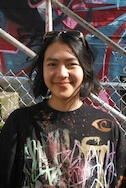 Mina Guan
she, her, hers, herself
The University of British Columbia
Mina Guan is a second-generation Chinese-Canadian immigrant settler on lək̓ʷəŋən territory (Victoria, BC, Canada) entering a dual master of archival studies and library information studies program at The University of British Columbia. She received a BA honours in applied linguistics, a minor in French, and a certificate in language and cultural proficiency of Chinese from the University of Victoria in 2024.
Mina’s journey into the library and archive fields is marked by her research background in Chinese heritage language maintenance and professional experiences at institutions such as the University of Victoria Art Collections, the Art Gallery of Greater Victoria, and the Royal British Columbia Museum. As an aspiring GLAM-sector professional, Mina is looking forward to working in the realms of equitable multilingual metadata description, archives and libraries for linguistic preservation, and accessible heritage information.
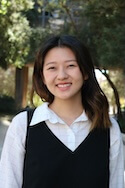 Cate Gvon
she, her, hers, herself
University of California, Los Angeles
Cate Gvon is an MLIS student at UCLA with an interest in technologies of inclusion, disability studies, and blindness/visual impairment. She is interested in accessible design and information-seeking behavior as it relates to disability, bodily difference, and women’s health. She participates on the UCLA Committee on Disability (UCOD) as a voting member. She received her BA in Russian studies with minors in history and Asian languages from UCLA and graduated with advanced proficiency in Russian and Korean.
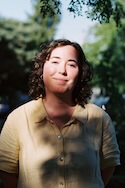 Alia Hijaab
she, her, hers, herself
The University of British Columbia
Alia Hijaab is an artist, researcher, and graduate student pursuing her dual MAS/MLIS. She has roots in Syria, Qatar, the Southern United States, and now Vancouver, BC. She is the co-president of El Yasmin Library, a student-run community library offering Arabic-language and Middle East & North Africa (MENA) books and media. Her work is focused on building information ecosystems that are not only accessible, but emotionally and culturally legible to Arab diasporic communities. She is currently developing a digital library of Middle Eastern medicinal plant knowledge and working towards her academic research in oral history, digital preservation, and the exploration of digital and social media as a record of diasporic memory-making.
With an undergraduate degree in animation from Emily Carr University and a background in nonprofit cultural work, Alia oscillates between an interdisciplinary storytelling practice and her deep interest and research in archives and libraries. As a Kaleidoscope Scholar, she aims to sharpen technical skills, sustain her current and future research, and grow alongside others who understand archives as sites of survival, refusal, and repair.
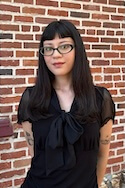 Summer Ibarra
she, her, hers, herself
University of California, Los Angeles
Summer Ibarra is a first-generation graduate student in the UCLA Master of Library and Information Science (MLIS) program with a specialization in archives. She earned her AA degrees in art history and humanities at East Los Angeles Community College, then transferred to UCLA, where she received a BA in art history.
With interdisciplinary interests in arts and culture, Summer actively sought programs that prioritized equity and community engagement. This passion led her to pursue two consecutive Getty Marrow Undergraduate Internships, participate in local conservation initiatives to preserve murals by Latina/o artists in East LA, and manage a project that made a collection of photographs documenting generations of Mexican-owned businesses and family archives in a historic district accessible on a public database. As an incoming graduate student, she is committed to using her academic foundation as a form of advocacy for historically marginalized communities in Los Angeles.
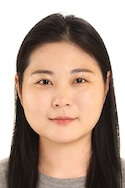 Migyeong Jeon
she, her, hers, herself
University of Maryland
Migyeong is a librarian and researcher with a strong interest in information access, social justice, and East Asian studies. She recently completed a one-year internship at the Library of Congress, where she published a research guide on the South Korean democratization movement. She currently works at a library museum in Korea and is preparing to pursue graduate studies in library and information science in the United States. Her professional background spans public services, research support, and multilingual resource development. She is particularly passionate about promoting inclusive access to information for marginalized communities and fostering transnational academic collaboration.
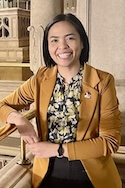 Rujipa Laosin
she, her, hers, herself
The University of Arizona
Rujipa Laosin is a first-year master’s student in library and information science at The University of Arizona. She earned her BA from Rajamangala University of Technology Krungthep, Thailand. She moved to Vancouver, Canada, in 2019 and began her library path by enrolling in the Library and Information Technology diploma program at Langara College. Rujipa currently works at Capilano University, North Vancouver, as an e-resources support library technician.
Throughout her journey, Rujipa has been contributing in various ways: volunteering, mentoring, and taking part in committee work. Working in an academic library, she has developed many areas of interest, including digital services, assessment, and library leadership. She has also been taking strides to connect North American libraries with resources and institutions from Southeast Asia. Her hope is that, through the Kaleidoscope Program, she and her peers can help one another develop their potential as librarians.
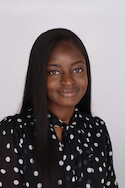 Clara Obeng-Akrofi
she, her, hers, herself
The University of North Carolina at Chapel Hill
Clara Obeng-Akrofi is a graduate student at The University of North Carolina at Chapel Hill, pursuing a master’s in information science with a concentration in data science and health informatics. Her work focuses on the intersection of people and technology, with a strong interest in human-centered AI and designing inclusive, people-first technological solutions.
Beyond academics, Clara is passionate about advancing accessibility and inclusivity in libraries, technology, and higher education. She is committed to amplifying diverse voices and advocating for representation and equity in all aspects of her work, from research to leadership.
 Nikki Orue
she, her, hers, herself
Syracuse University
Nikki Orue is currently pursuing a master of science in library and information science at Syracuse University. She previously earned a BA in political science with a minor in comparative literature from Fordham University, where her research focused on decolonial literature in Indonesia and health outcomes from COVID-19 in the Global South. Professionally, Nikki has a multidisciplinary design background, specializing in web, graphic, and user experience design, focusing on the development of accessible and engaging digital platforms. Concurrently, she works as a lead circulation clerk at her local public library.
Her academic and professional interests converge on the integration of technology, data visualization, and digital humanities within academic research environments. Nikki is particularly driven by visual storytelling and the creation of intuitive, user-centered library spaces that foster research and learning within the humanities. In her free time, Nikki enjoys painting, making zines, and watching anime.
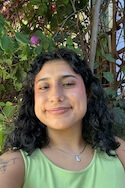 Dalia Quezada
they, them, theirs, themself
San José State University
Dalia is queer crafter, aspiring librarian + archivist, and the grandchild of Mexican immigrants from Tamaulipas & Jalisco. They were raised by Chicanos on Ohlone land. Their work is inspired by people in their family who preserve(d) memories through everyday practices/art forms, across generations and borders. They received their BA in women, gender, and sexuality studies from Mills College.
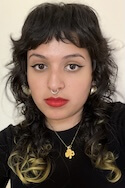 Joanna Ruiz Legarda
she, her, hers, herself
University of Wisconsin–Madison
Joanna Ruiz Legarda is an incoming MA LIS student at the University of Wisconsin–Madison. In 2025, she earned a BA in American studies and music with honors from Yale University, where she was also a Mellon Mays Undergraduate Fellow. She researches and writes about community archives, autonomous ways of archiving [musical heritage], and the musical heritage of Florida (her home state). As she continues working towards the completion of her master’s degree, Joanna hopes to learn from and engage with Indigenous knowledge systems and archives to advance her understanding of her academic interests. She aims to ultimately apply to doctoral programs in American studies or ethnomusicology.
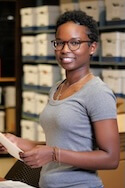
Andrea Tribble
she, her, hers, herself
The University of Alabama
Andrea Tribble is a first-year graduate student in the Master of Library and Information Science (MLIS) program at The University of Alabama with a concentration in archival studies. She holds a bachelor’s degree in African American studies and history from the University of Houston, and gained formative experience working in the M.D. Anderson Library Special Collections department.
As an undergraduate, Andrea participated in the Mellon Research Scholars program where she created a digital repository platforming the contributions of Black women as organizational leaders within the Black Campus Movement of the 1960s and ’70s.
She is pursuing a career in the archival-curatorial field, focused on the stewardship and activation of African American experiences throughout time. Her scholarly and professional commitments are rooted in the Akan concept of Sankofa, meaning “to go back and fetch it.” This principle reflects her belief in the power of using cultural memory practices to contextualize the present and provide frameworks for moving towards the future.
 Reagan Walker
she, her, hers, herself
Simmons University
Reagan Walker is an incoming graduate student in the Master of Library and Information Science program at Simmons University. She was a Mellon Mays Fellow and graduated from Stanford University with degrees in East Asian studies and science, technology, and society (STS) with a concentration in communication and media. Reagan received departmental honors for her undergraduate honors thesis, where she explored the history of museum accessibility initiatives for the blind in the US.
Previously, Reagan worked as an analytics consultant at a PR agency and used data to drive insights and inform strategy for clients across topics like health equity, travel, and agriculture. Reagan hopes to combine her professional background in data and analytics with her research interests to use emerging technologies to preserve marginalized voices, especially voices from communities that have been diminished or misrepresented in traditional collections.
A Charlotte, NC native, you’ll find Reagan taking pottery classes, writing poetry, or volunteering at her local farmers market in her free time.
 Majiyebo Yacim
she, her, hers, herself
University of Missouri
Majiyebo Yacim is an incoming MLIS student with prior degrees in media production. Over the past eight years, she has had the pleasure of working in three different libraries in the mid-Missouri area. As she has gained experience in library work, her commitment to the field has grown exponentially. In a New York Times article about Black women librarians from the Harlem Renaissance, Jennifer Schuessler writes, “For Black librarians of the period, librarianship wasn’t just about hosting writers or connecting books with patrons. It was also about creating an intellectual infrastructure that made Black materials visible—and findable—in the first place.” Following in this tradition, Majiyebo strives to blend all of her areas of study and expertise to preserve and create “an intellectual infrastructure” for media and born-digital materials, especially projects produced by Black and other underrepresented creators.
2024 Kaleidoscope Program Scholars

Sarah Meihui Bernstein
The University of North Carolina at Chapel Hill & NC State University
Sarah Meihui Bernstein is a current graduate student in the dual degree program between NC State University and The University of North Carolina at Chapel Hill, pursuing an MA in public history and an MS in library science. Sarah earned a BA in the history and sociology of medicine from the University of Pennsylvania, where she also minored in bioethics and African studies and received departmental honors for her thesis on authority and legitimacy in medicine. Sarah’s research is focused on understanding historical and contemporary epistemic hierarchies to address exclusion, marginalization, and silences in history. Sarah is currently working on a public history master’s thesis on the ethics of human remains on display in medical museums and collections. Sarah’s work has been influenced by the formative internships that she held at the Kislak Center for Special Collections, Rare Books and Manuscripts; Duke University Rubenstein Library; and Harvard Library. Sarah is also a 2024–2025 American Library Association Spectrum Scholar.
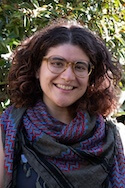 Gianna Brassil
she, her, hers, herself, they, them, their, theirs, themself
San José State University
Gianna is a graduate student in the master of library science program at San José State University’s School of Information. They were a Mellon Mays Fellow and graduated from Macalester College with degrees in anthropology and religious studies. They were awarded the David W. McCurdy Award for Excellence in Anthropological Research for their thesis on the co-emergence of Middle East area studies and the US national security state.
As an undergraduate, Gianna co-founded Para Chuparse Los Dedos, an oral history project that explored the relationship between food, migration, and Central American identity in the Bay Area. A recipient of the Critical Language Scholarship and Boren Scholarship, she has collaborated with communities in Turkey and Azerbaijan on projects that examine the production of history and the politics of memory across Anatolia and the Caucasus.
Gianna is interested in pursuing a career in digital archival work with a focus on collections that reflect the heritage of the Southwest Asian and North Africa (SWANA) region, particularly the post-Ottoman sphere. She looks forward to how her MLIS degree will help her pursue her professional interests, allowing her to explore how digital humanities and archives can become active sites for conceptualizing decolonial, counter-hegemonic futures.
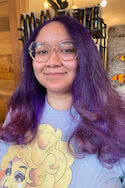 Nebraska Chatham
they, them, their, theirs, themself
Simmons University
Nebraska Chatham (they/them) is a current MLS student at Simmons University’s West Campus. They are most passionate about accessibility, research, and outreach and use every opportunity to understand their community better and fight for social justice. Nebraska strives to be a research and outreach librarian one day, and maybe even a library director!
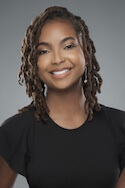 Nina-Simone Edwards
she, her, hers, herself
The Catholic University of America
Nina-Simone Edwards is currently pursuing her master’s in library and information sciences from Catholic University in pursuit of a law librarian career. She also seeks to research within the field of data and privacy. She cultivated this research interest while pursuing her JD at Georgetown University Law Center, where she began her exploration of the meaning of privacy for historically disadvantaged communities. Some highlights of her law school experience include: being an editor for both the Georgetown Law Journal and the Georgetown Law Technology Review, membership of the Women of Color Collective, and being named an International Association of Privacy Professionals (IAPP) Westin Scholar. She was also a student attorney with the Intellectual Property and Information Policy Clinic where she brought her creativity and passion for community advocacy to her clients.
Before law school, Nina-Simone was a Fulbright Scholar in Guatemala, and a City Year AmeriCorps Member in Washington, DC. Since receiving her JD in May 2024, she works as a postdoctoral fellow on the Redesigning the Governance Stack Project at Georgetown Law’s Institute for Technology Law and Policy. When she’s not reading or writing (for work), you may still find her reading or writing (for fun!) at the nearest library.
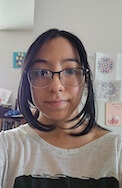 Caitlin Valerie Herrera
she, her, hers, herself
Dominican University
My name is Caitlin Herrera, I also go by Cata! I am a Mexican woman who is proud of her roots and family. I’ve loved libraries since I was a child and grew to love archives during my undergraduate days in the University of Illinois Chicago. I am continuing my educational journey at Dominican University in River Forest, IL. I treasure archives because they hold so many memories of the past and help people understand their history in the present, much like my community in Mexico! I grew up listening to my family telling stories of the land and our ancestors. I keep each story close to my heart for future generations, so that our family will always be able to know where we came from. My dream is to find ways to share and repatriate archival materials to the communities they come from! I am also an avid reader and love finding new books to read at the local bookshop!
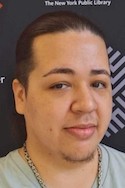 Danny C. Jimenez
he, him, his, himself
Queens College, CUNY
Danny Jimenez (hee-MEH-nes) is a writer, poet, podcaster, and author of the short story “Like an Old Tree” in the anthology Ni de aquí, Ni de allá: A multi-perspective account of the Dominican diasporic experience. Danny’s deep passion for writing and thoughtful dialogue is reflected in his accomplishments. He showcased his work at Brooklyn Comic Con, participated as a panelist at New York Comic Con, spoke at events organized by the New York Public Library (NYPL), is the vice-chair of the Latino* Employee Resource Group (ERG) at NYPL, and participated as a panelist at Dream Con. His mission is to help the disenfranchised by upping their literacy and putting them in positions to help others. He is an avid reader and a fan of the 007 series.
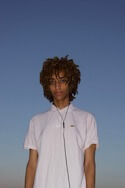 Mati Kassaye
she, her, hers, herself, they, them, their, theirs, themself
University of Maryland
Mati Kassaye is an incoming MLIS student. She’s excited to continue her education and growth as a human being. They try their best to preserve their creativity and curiosity, despite it all. Mati hopes to work in the archival field and is particularly interested in community-led and community-oriented preservation of music and art from the margins. She’s also a small-time musician and loves to read comics.
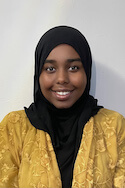 Kaha Liban
she, her, hers, herself
Western University
Kaha Liban (she/her) is a graduate student who is currently completing her MLIS degree at Western University in Ontario. In 2020, she graduated with a BA (Honours) in Global Health from York University. Her interest in librarianship was inspired by one librarian’s work in the global health field during the Ebola Crisis and from her travels to Somalia when she learned that having access to information and a library was not accessible. Kaha is interested in how digital libraries can be used as a driving tool to help improve literacy in developing nations thus improving literacy rates. Other research interests also include digital curation/preservation, open access, and health research, particularly global health. After graduation, Kaha hopes to become an academic librarian and to make a meaningful impact in the field as well be an inspiration to future librarians.
 Amy Lim
she, her, hers, herself
University of Alberta
I am a master of library and information science student at the University of Alberta. I hold a BSc in biology with a minor in medical physiology as well as gerontology from the University of Waterloo.
My academic interests include health sciences librarianship, where I hope to make a meaningful impact on health information literacy with a focus on marginalized communities. My goal is to contribute to the creation of health research through open access (OA) models to reduce existing barriers to accessing meaningful health information. Through Kaleidoscope my hope is to obtain valuable insights about current OA efforts in the health sciences to advance the information seeking behaviours of medical professionals and library users, through an inclusive and equitable lens.
Currently, I am a circulation services supervisor where I am involved in various equity, diversity, inclusion, and accessibility initiatives through my committee work. I am also a 2024–2025 American Library Association (ALA) Spectrum Scholar.
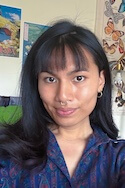 T Lim
T Lim
she, her, hers, herself
The University of Texas at Austin
T is currently a dual master’s student in women’s and gender studies and information studies who leverages the hybridity of her program to pursue her research interests in memory, performance, and queer theory. With a professional goal of becoming a social sciences instruction librarian, T believes that scholarly and professional community are foundational in the labor required for programs and pedagogies that prepare students for the citational, intellectual, and personal intricacies of navigating the academy. Her passion for information work is meaningfully informed by her experience in theological, university, and public libraries: interlaced throughout all these distinct settings is her well-tested commitment to fostering relationships with patrons that simultaneously encourage learning and an understanding that libraries are community spaces. In her free time, you can find T building Japanese figurines, reading tarot cards, or crying to a childhood movie (most likely 13 Going on 30).
Rosalía Iriye
University of California, Los Angeles
Rosalía Iriye is queer Latine-Asian pursuing a master’s in library and information science (MLIS) at the University of California, Los Angeles (UCLA).
As a recent labor studies alum at UCLA, Rosalía served in the development of her departmental archive, establishing digital preservation workflows at the UCLA Institute for Research on Labor and Employment (IRLE). She currently works on IRLE’s digitization partnership with the Garment Worker Center and on related International Ladies Garment Workers Union archival materials.
They’ve also worked for over two years at the UCLA Chicano Studies Research Center library, assisting in archival collections management for grant-funded projects. This work includes California State Library Preserving California’s LGBTQ+ History grant “Preserving Jotería: Rehousing Gronk and Cyclona Papers” for performance art materials, National Endowment of the Humanities partnership with the Digital Transgender Archive’s Homosaurus: An International LGBTQ+ Linked Data Vocabulary, and standardizing digitization workflows for the Virginia Espino and Renee Tajima-Peña Collection of Sterilization Records.
In graduate study, Rosalía hopes to explore multimedia archives and digital libraries at the intersections of working-class arts and subcultures, labor movements, and gender/sexuality studies.
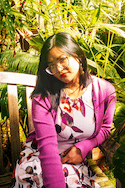 Elvira (Vera) Mancini
she, her, hers, herself, they, them, their, theirs, themself
University of Hawaiʻi at Mānoa
I am a proud Transpacific Adoptee of Zhuang and Dai descent, born in Pingnan, Guangxi, and raised in Seattle, Washington. I am currently privileged to be a guest during my graduate studies in the ‘āina of O‘ahu, part of the larger territory recognized by Kānaka ‘Ōiwi as their ancestral grandmother, Papahānaumoku. I am passionate about history, books, art, and their intersections. My love of reading spans a myriad of genres, and I find healing in writing poetry and prose. I enjoy expressing myself through dancing and creating art, especially book arts such as bookbinding, printmaking, typography, paper folding and marbling. As a library student, I intend to specialize in cultural heritage and special collections librarianship, serving historically oppressed communities and focusing on decolonization and neurodivergent accessibility in libraries. I hope to become a librarian who upholds my responsibility to my people and culture through my work, respecting the stories and the communities I work with.
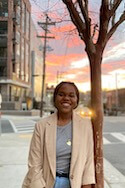 Bernice Meja
she, her, hers, herself
The University of North Carolina at Chapel Hill
Bernice is the eldest child of Zimbabwean immigrants who immigrated to the United States, her country of birth, and then finally settled in Alberta, Canada. Bernice returned to the United States to pursue a BS in physics and a BA in philosophy at Duke University. She is now a second-year master of science in information science (MSIS) student at The University of North Carolina at Chapel Hill (UNC).
Bernice serves as the UNC Library Makerspace graduate assistant as well as a 1798 Mentor under the Equity Fellowship, where she mentors first-generation college students at UNC. Her previous experience as a college advisor was dedicated to enhancing access to higher education within a rural North Carolina high school. Bernice aided students throughout the college application and financial aid process, fostering her passion for user experience, particularly focusing on underrepresented groups. This journey inspired her profound interest in advocating for inclusive user experiences and led her to discover her passion for UX research. She aims to bring her passion into library services to create more inclusive and accessible resources for all users. Bernice is a 2023–2024 ALA Spectrum Scholar and the 2023 ARL Julia C. Blixrud Scholarship recipient.
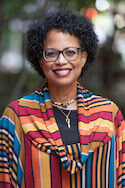 Roxane Pickens
she, her, hers, herself
Long Island University
Roxane Pickens is an interdisciplinary educator working to create spaces of connection and community through libraries, in classrooms, and beyond. While pursuing an MSLIS at Long Island University, she works as the community engagement librarian and head of external engagement at New York University Libraries. She formerly served as the director of the Learning Commons at University of Miami Libraries and prior to library work, was a senior lecturer in both English composition and American studies at the College of Arts and Sciences. Pickens earned a master’s degree and doctorate in American studies at the College of William and Mary, and a bachelor’s degree in American studies from the former Newcomb College at Tulane University. Her literary and cultural studies scholarship explores identity and festivity in Harlem Renaissance/Jazz Age literature and expressive culture, and in the field of librarianship she has published on outreach and engagement practices. Her current research and teaching interests include critical and inclusive library engagement, participatory arts and social justice practices, American studies, African American literature/culture, US identity construction, and the rhetorical dimensions of ethnic festive/expressive culture.
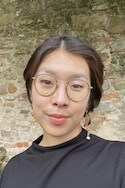 Isabel Quynh Ryan
she, her, hers, herself
University of Illinois at Urbana-Champaign
Isabel Ryan is from Northern Virginia, with a background in neuroscience, creative writing, and values-driven nonprofit organizations. She aspires to work with diverse stakeholders to improve health science librarianship and promote ethical research practice. Her interests combine interactive education experiences with equity, play, and connection to both the natural and built environment.
Melanie Salvat
they, them, their, theirs, themself
Florida State University
Melanie Salvat is a queer, neurodivergent, first-gen Latinx graduate of Boston University (BU), equipped with a BA in biology with a specialization in ecology & conservation biology. Born and raised in Miami, Florida, they are currently enrolled in Florida State University’s Master of Science in Information program. Mel has five years of experience working within university libraries and museums, during which they developed the BU Natural History Museum’s first online searchable database of herbarium specimens. After graduating, Mel was consulted on a global herbarium digitization project using optical character recognition and generative AI in collaboration with the Harvard University Herbaria. In 2024, they were awarded a full sponsorship by the Network of the National Library of Medicine to attend the New England Science Boot Camp for Librarians hosted by the Boston Library Consortium. As a person of Cuban and Venezuelan heritage, they feel incredibly honored to have been chosen as an ARL Kaleidoscope Program Scholar. Currently, Mel serves as a writer and editor for the Boston University Libraries Universal Service Guide for reference and access services staff. In their free time, they enjoy painting, singing, exploring nature, and indulging in copious amounts of sci-fi cinema.
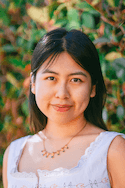 Emily Chen Taina
San José State University
Emily Chen Taina is an incoming MLIS student at San José State University. They received a BS from Santa Clara University, majoring in computer science and minoring in mathematics and women’s and gender studies. Emily aspires to work as an academic librarian and archivist, and to carry out projects devoted to preserving local histories in the form of oral histories. Their current work revolves around improving accessibility within the physical space of the library through its signage. They are deeply committed to making academic libraries a more visible resource that people who have been historically marginalized can turn to for support and find community. Emily is also a 2024–2025 American Library Association (ALA) Spectrum Scholar.